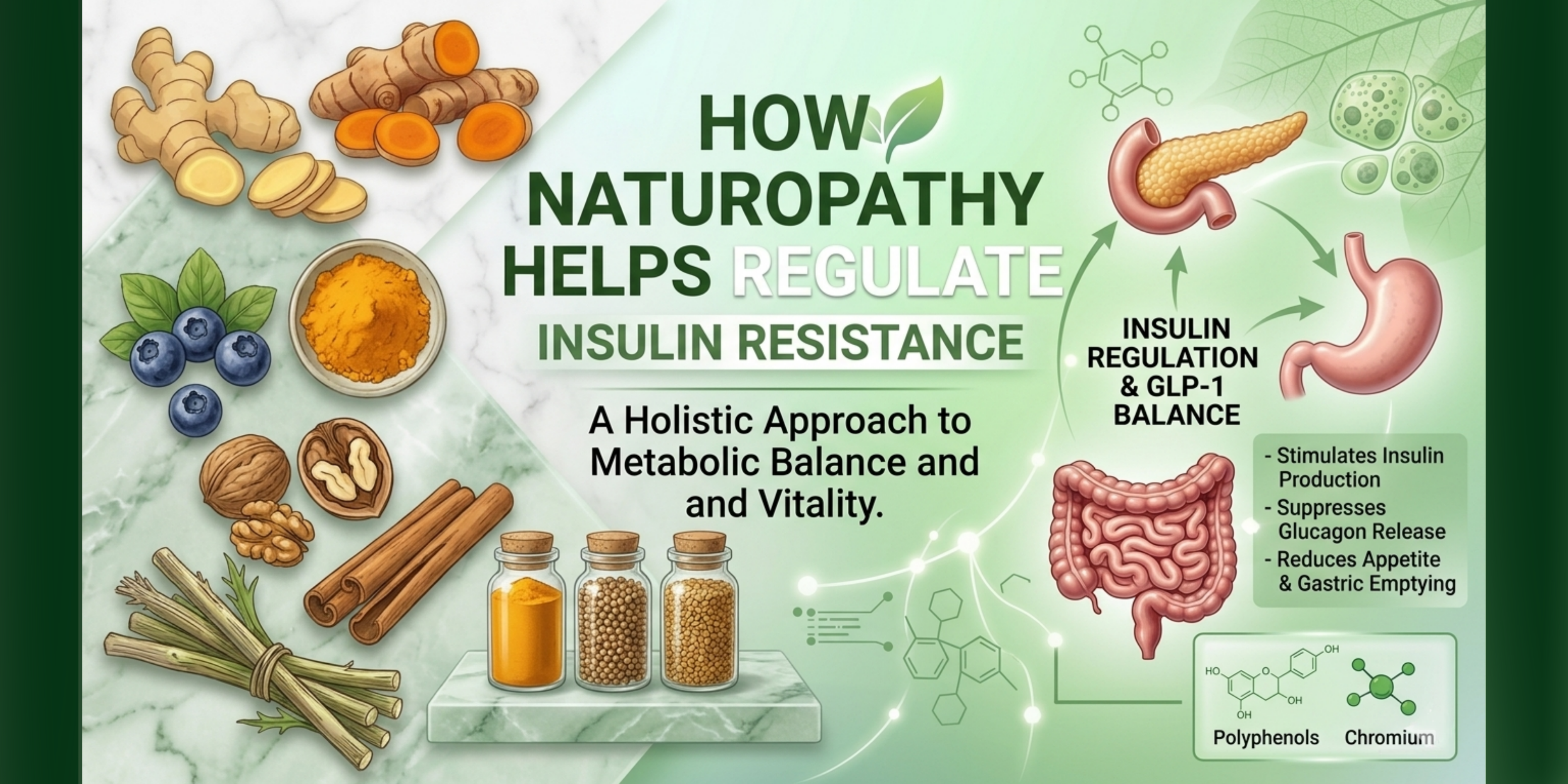

The GLP-1 Natural Alternative: How Naturopathy Helps Regulate Insulin Resistance
GLP-1 has become one of the most talked-about hormones in modern metabolic health. GLP-1 stands for Glucagon-Like Peptide-1. It’s a natural hormone your body makes in the gut that helps control blood sugar, appetite and digestion. When you eat and blood glucose rises, GLP-1 signals the pancreas to release insulin, which helps lower blood sugar. GLP-1 reduces glucagon secretion from the pancreas. Glucagon normally signals the liver to release stored glucose, so lowering glucagon keeps blood sugar from spiking. Importantly, GLP-1 only triggers insulin when blood sugar is high, which reduces the risk of hypoglycemia (dangerously low blood sugar).
Its growing popularity stems from its profound impact on weight management and type 2 diabetes care. Medications such as Ozempic, Wegovy, and Mounjaro have brought GLP-1 into the spotlight by mimicking this natural hormone to improve metabolic control.
But GLP-1 is not synthetic by nature — it is physiological. Your gut releases it every time you eat. The naturopathic perspective does not aim to override the body’s signaling system. Instead, it works to restore the internal mechanisms that regulate GLP-1, insulin sensitivity, and blood glucose balance.To understand how this works, we first need to understand what goes wrong in insulin resistance.
Understanding the Metabolic Breakdown
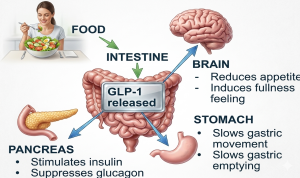
After eating, carbohydrates are broken down into glucose. Blood sugar rises, and the pancreas releases insulin. GLP-1, secreted from the small intestine, enhances insulin release, slows stomach emptying, and signals fullness to the brain.
GLP-1 signaling may also become blunted due to gut dysfunction, inflammation, and metabolic stress. Rather than forcing the system to respond through medication alone, naturopathy addresses why the signaling became impaired in the first place.
Restoring Insulin Sensitivity at the Cellular Level
Insulin resistance is largely driven by chronic inflammation, poor muscle mass, nutrient deficiencies, and blood sugar volatility. When these drivers improve, insulin signaling improves naturally.
In insulin resistance, cells stop responding properly to insulin. The pancreas compensates by producing more insulin. Over time, this leads to:
- Chronically elevated blood glucose
- Increased fat storage (especially abdominal fat)
- Persistent hunger and cravings
- Energy crashes
Naturopathic interventions focus on stabilizing blood glucose through whole-food nutrition rich in fiber, protein, and healthy fats. Balanced meals reduce glucose spikes, which lowers excessive insulin demand. Soluble fiber slows carbohydrate absorption, while protein stimulates both insulin and GLP-1 in a physiologically balanced way.
Strength training plays a particularly powerful role. Muscle tissue acts as a glucose reservoir, absorbing sugar from the bloodstream independent of large insulin surges. Increasing lean muscle mass improves fasting glucose, lowers insulin levels, and enhances metabolic flexibility.
Targeted nutrients such as magnesium, alpha-lipoic acid, omega-3 fatty acids, chromium, and myo-inositol are often used in clinical naturopathic care to enhance insulin receptor sensitivity and reduce inflammatory stress.
As insulin sensitivity improves, the pancreas no longer needs to overproduce insulin—and metabolic stability begins to return.
Hydrotherapy (Hot & Cold Water Therapy) → Improves Circulation & Metabolism
Naturopathic hydrotherapy (contrast showers, hot/cold compresses, packs, steam, etc.) works by stimulating circulation and the nervous system.
How this may help:
- Improves blood flow to muscles
- Supports metabolic activity
- Reduces stress hormones
- May improve how cells use glucose
When circulation improves, muscles can absorb sugar from the blood more efficiently, which improves insulin sensitivity.
Supporting Natural GLP-1 Production Through Gut Health
GLP-1 is produced by specialized L-cells in the intestinal lining. The health of your gut directly influences how effectively this hormone is released.
A disrupted microbiome — often caused by processed foods, chronic stress, antibiotics, or inflammation — can impair GLP-1 secretion. Research shows that certain gut bacteria enhance GLP-1 production through fermentation of soluble fiber into short-chain fatty acids.
Naturopathic strategies emphasize restoring microbial diversity through:
- Fermented foods
- Prebiotic fibers such as flax, chia, oats, and legumes
- Reducing ultra-processed foods
- Supporting digestion and stomach acid balance
When the gut lining is healthy and microbial balance improves, GLP-1 response becomes more robust and appetite regulation improves naturally.
Diet (High-Fiber, Whole Foods) → Helps Your Body Make More GLP-1
When you eat fiber-rich foods (vegetables, fruits, lentils, whole grains, and seeds), your gut bacteria break them down and produce natural substances that signal your intestines to release GLP-1.
- You feel full longer
- Your blood sugar rises more slowly
- Your body releases insulin in a more balanced way
- Over time, your cells respond better to insulin
Also, reducing sugar and processed foods lowers inflammation and belly fat — and that helps fix insulin resistance.
Simple takeaway:
Better food → better gut hormones → better blood sugar control.
Regulating Cortisol: The Overlooked Blood Sugar Hormone
Stress physiology is one of the most underestimated contributors to insulin resistance.
Stress raises cortisol, elevated cortisol raises blood sugar to prepare the body for “fight or flight,” and high cortisol also makes your body resistant to insulin. When stress becomes chronic, blood sugar remains elevated even without food intake. This drives higher insulin output and worsens abdominal fat accumulation. Naturopathic care often incorporates stress regulation through sleep optimization, nervous system support, adaptogenic herbs, breathwork, and circadian rhythm alignment.
Yoga helps by lowering stress hormones, improving sleep, reducing inflammation, improving muscle glucose uptakeSome research also suggests regular physical movement (including yoga) may improve your body’s natural GLP-1 response after meals.
When cortisol normalizes, fasting glucose often improves — sometimes dramatically.
Simple takeaway:
Less stress → better insulin action → more stable blood sugar.
Sustainable Weight Regulation Without Metabolic Suppression
GLP-1 medications can significantly suppress appetite, which can be beneficial in certain cases. However, rapid weight loss without adequate protein intake or resistance training may lead to lean muscle loss.
A naturopathic metabolic restoration plan prioritizes preservation of muscle mass while improving insulin sensitivity. As blood sugar stabilizes and inflammation decreases, appetite naturally recalibrates. Cravings diminish not because they are chemically suppressed but because metabolic signals are functioning properly again.
The goal is not dependency on an external signal but restoration of internal regulation.
When an Integrative Approach Makes Sense
There are situations where GLP-1 medications are medically necessary, particularly in advanced type 2 diabetes or severe metabolic disease. An integrative model does not reject pharmaceuticals outright. Instead, it combines appropriate medical therapy with foundational metabolic repair.
Supporting gut health, muscle mass, micronutrient sufficiency, inflammation control, and stress resilience enhances outcomes whether or not medication is used. Top of FormBottom of Form
The Bottom Line
GLP-1 is not a trend. It is a hormone deeply woven into your metabolic design. Insulin resistance is not simply a willpower issue — it is a signaling issue. When inflammation decreases, muscle mass increases, gut health improves, and stress hormones stabilize, GLP-1 and insulin begin working the way they were designed to.
The body is not broken. It is dysregulated, and regulation can often be restored.
Naturopathic treatments don’t act like GLP-1 injections.
Instead, they:
- Improve gut health
- Reduce inflammation
- Lower stress hormones
- Improve circulation
- Reduce excess body fat
All of these create an environment where:
✔ Your body makes GLP-1 more effectively
✔ Insulin works better
✔ Blood sugar becomes more stable
Frequently Asked Questions
1. What is GLP-1 and how does it affect blood sugar?
GLP-1 (Glucagon-Like Peptide-1) is a natural hormone produced in the gut. It helps regulate blood sugar by stimulating insulin release, reducing glucagon, slowing digestion, and promoting a feeling of fullness.
2. Can GLP-1 be increased naturally?
Yes. GLP-1 can be improved naturally through a high-fiber diet, balanced meals, gut health support, regular exercise, and stress management. Naturopathy focuses on restoring these internal mechanisms.
3. How does naturopathy help insulin resistance?
Naturopathy improves insulin sensitivity by reducing inflammation, supporting gut health, balancing hormones, improving muscle mass, and stabilizing blood sugar through diet and lifestyle changes.
4. Is it possible to manage insulin resistance without medication?
In early or moderate cases, insulin resistance can often be improved naturally through nutrition, exercise, stress reduction, and metabolic correction. However, medical supervision is important for advanced cases.
5. What foods help improve GLP-1 levels?
Foods rich in fiber such as vegetables, fruits, whole grains, flaxseeds, chia seeds, and legumes help stimulate natural GLP-1 production by supporting gut bacteria.
6. Does stress affect blood sugar levels?
Yes. Chronic stress increases cortisol, which raises blood sugar levels and worsens insulin resistance. Managing stress is essential for metabolic health.
7. How long does it take to improve insulin resistance naturally?
With consistent lifestyle changes, improvements can begin within a few weeks, but significant metabolic restoration may take a few months depending on the individual.